-01%2FNewlogo1.png&w=1080&q=75)
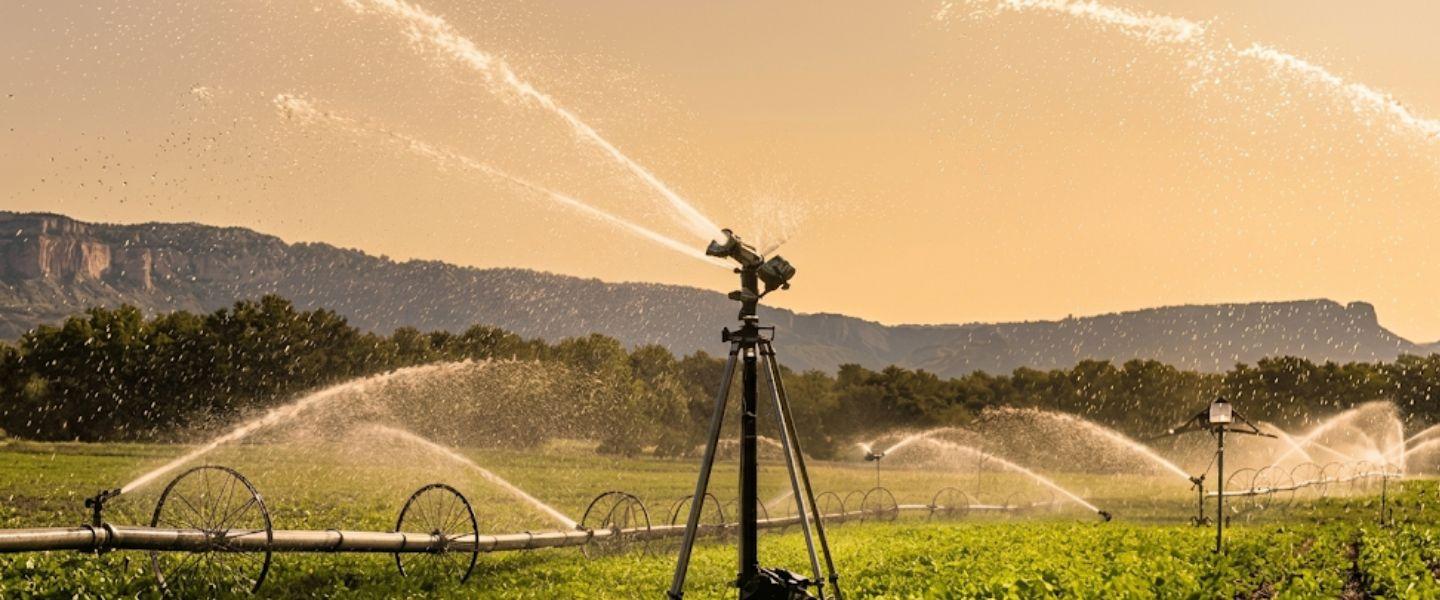
Sprinkler irrigation is a crop irrigation technique that mimics natural rainfall. By spraying water into the air through small nozzles, these systems distribute water evenly across your field, at rates matched to crop needs.
One of the most important purposes of sprinkler irrigation is ensuring uniform water application. When designed and operated correctly, system efficiency can reach as high as 95%.
Types of Sprinkler Systems
Sprinkler irrigation systems are available in various configurations to suit different operations:
- portable lateral with sprinklers
- dragline
- semi-solid set
- permanent solid set
- side roll
- big gun
The right system for your farm depends on several factors : crop type, production management, field size, slope and shape, operating time requirements, and budget.
Successful irrigation management requires a clear understanding of these parameters. System performance ultimately depends on your knowledge of operation requirements and crop needs. Poor management is the greatest factor reducing water application efficiency.
Advantages of Sprinkler Irrigation
Along with drip systems, sprinkler irrigation offers some of the highest efficiency available:
- water savings : up to 50% reduction compared to surface irrigation
- increased productivity : 15% to 25% crop yield improvement
- versatile application- suitable for all soil types and slope terrains
- broad crop compatibility : works for vegetables, cereals, small fruits, and other crops
- easy installation and maintenance
- mobile systems : can be repositioned throughout the field
- precise control : easy adjustment of water application rates
- integrated management : allows pesticide and split Fertilizer application
- soil protection : reduces erosion
- labour efficiency : lower overall farm labour costs
System Limitations
While sprinkler irrigation offers significant benefits, there are some constraints to consider :
- wind sensitivity : high winds can cause uneven water distribution
- evaporation loss : significant loss possible when irrigating in high temperatures
- pressure requirements : systems require adequate water pressure to operate effectively
- crop limitations : not suitable for crops susceptible to foliar diseases or very tall crops
- initial investment : some sprinkler types involve higher upfront costs
Getting Started
Selecting the right sprinkler system requires balancing your crop requirements, field conditions, water availability, and budget. Understanding both the advantages and limitations ensures you make an informed decision that delivers optimal performance.
Need help choosing the right sprinkler irrigation system for your operation? Contact us for expert advice tailored to your farm’s needs.
 Keep Reading